the waterhouse

The Aquatic House Complex or Waterhouse Complex at the National Botanic Gardens of Ireland includes the Victoria Waterlily House (1854), the Cactus House (1890) and the Fern House (1966). The complex was closed in 2004, and over the past two decades, a novel ecology has formed within these structures and their boundary wall, now sealed off from public access. With plans for the restoration of the complex in place, this established novel ecology which has formed over the past 20+ years has a finite timeline, as yet to be determined.

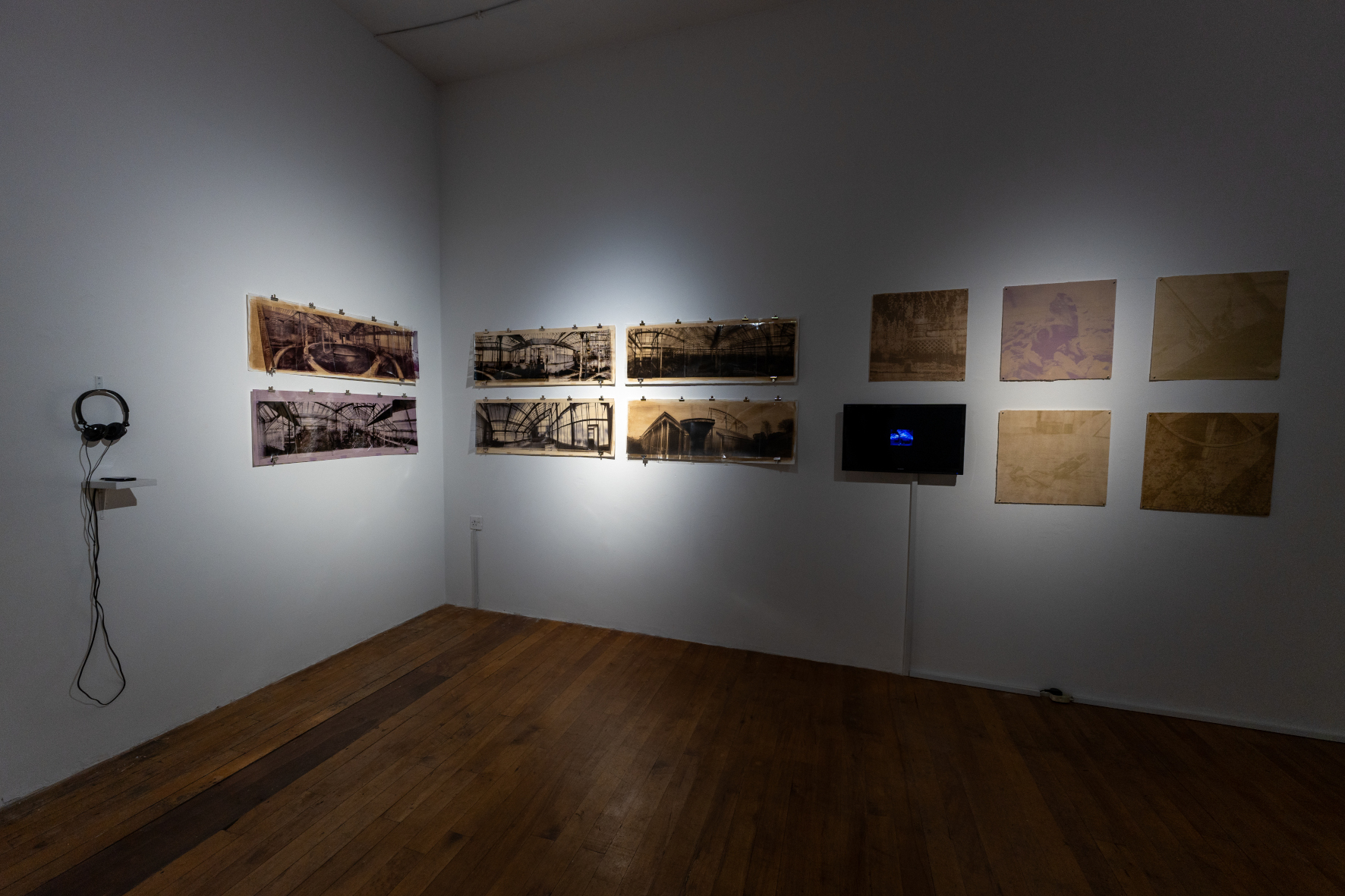
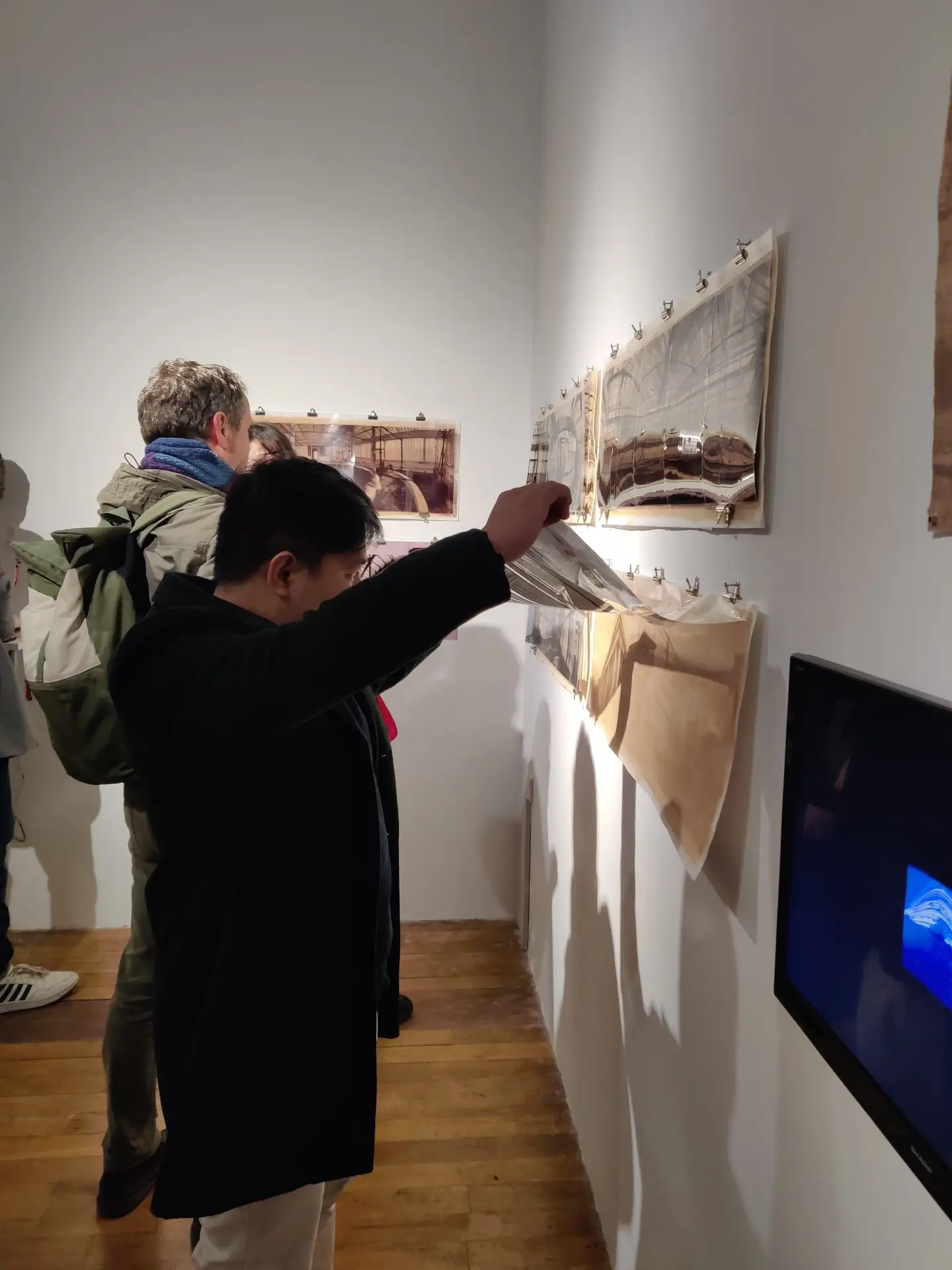
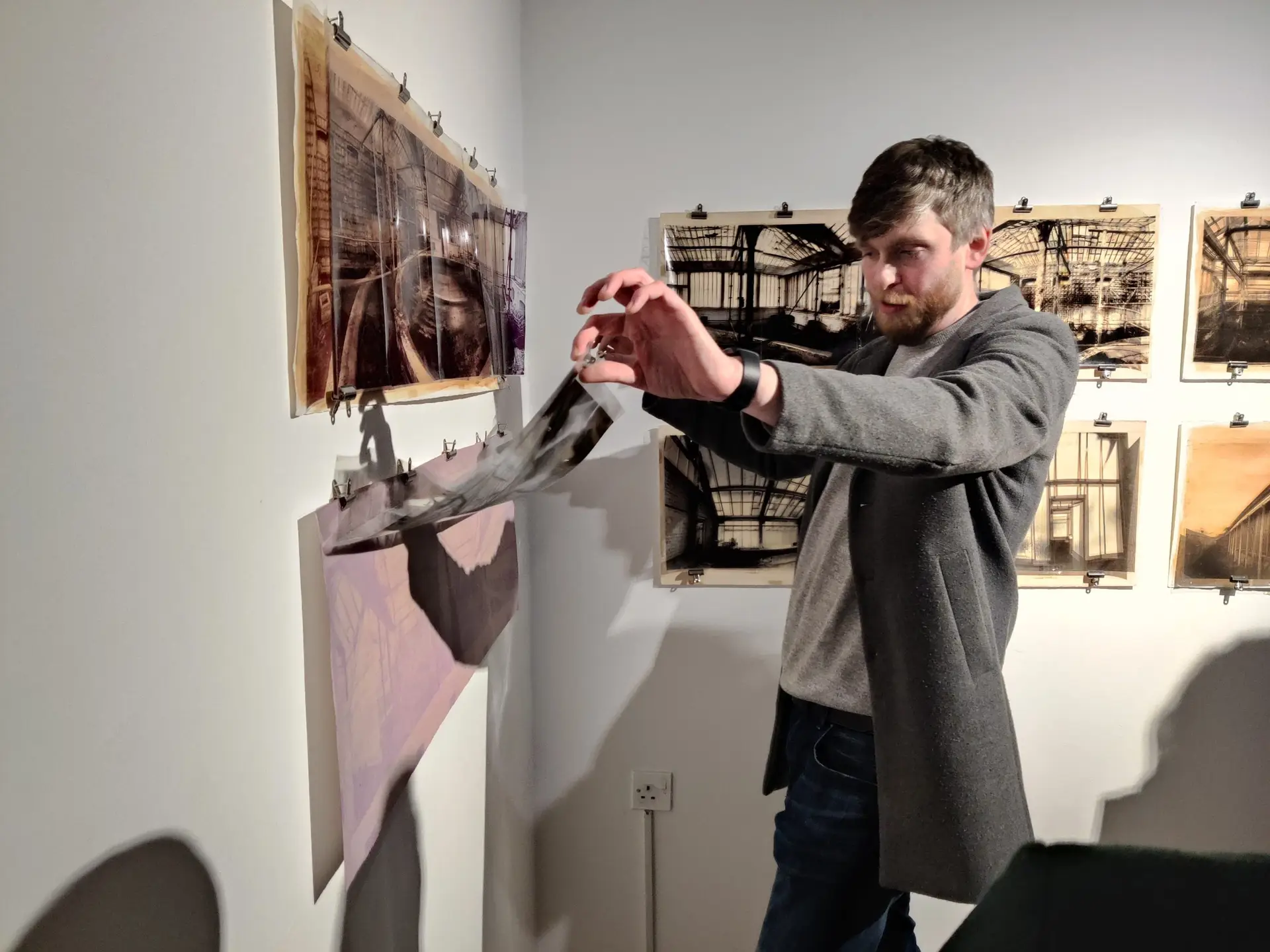
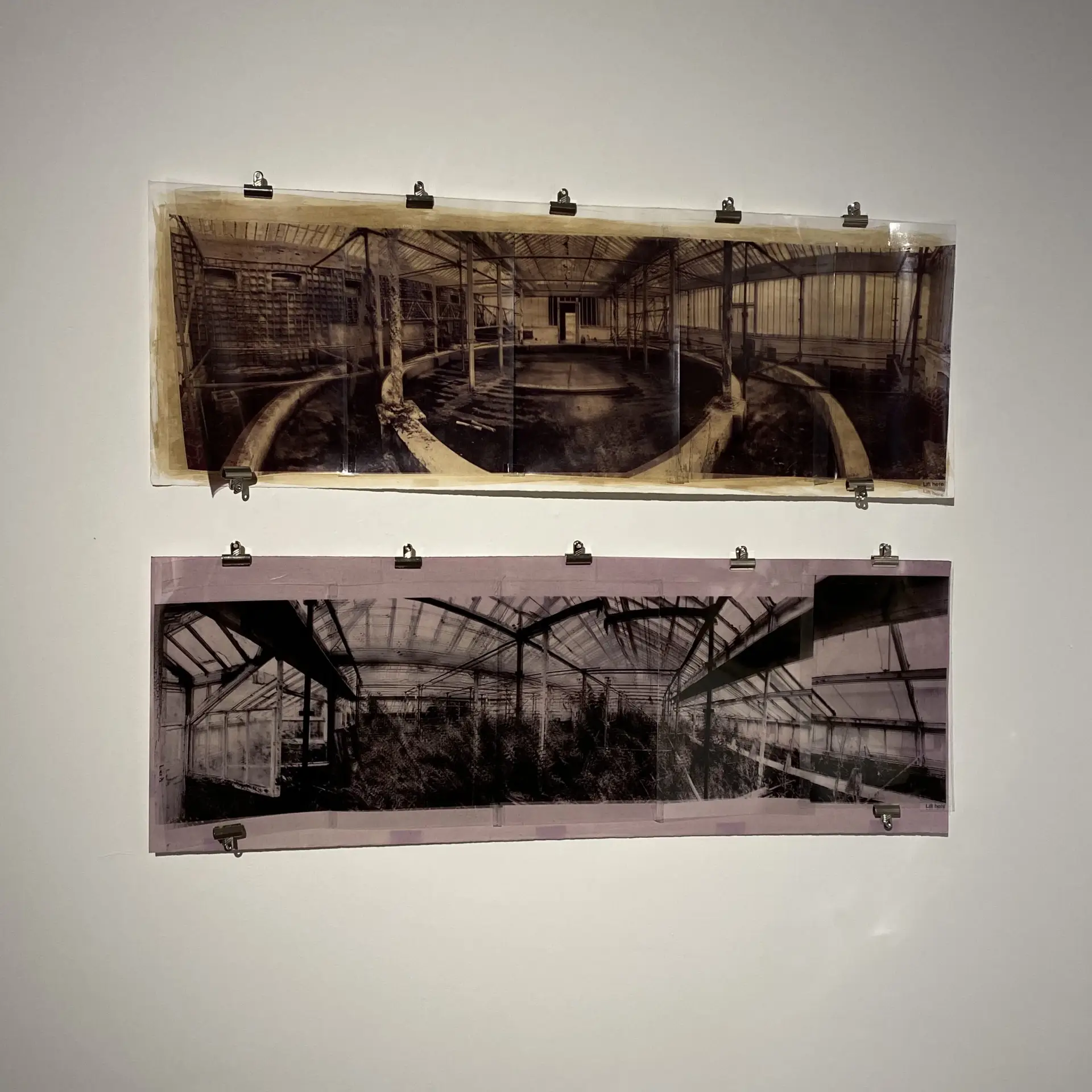
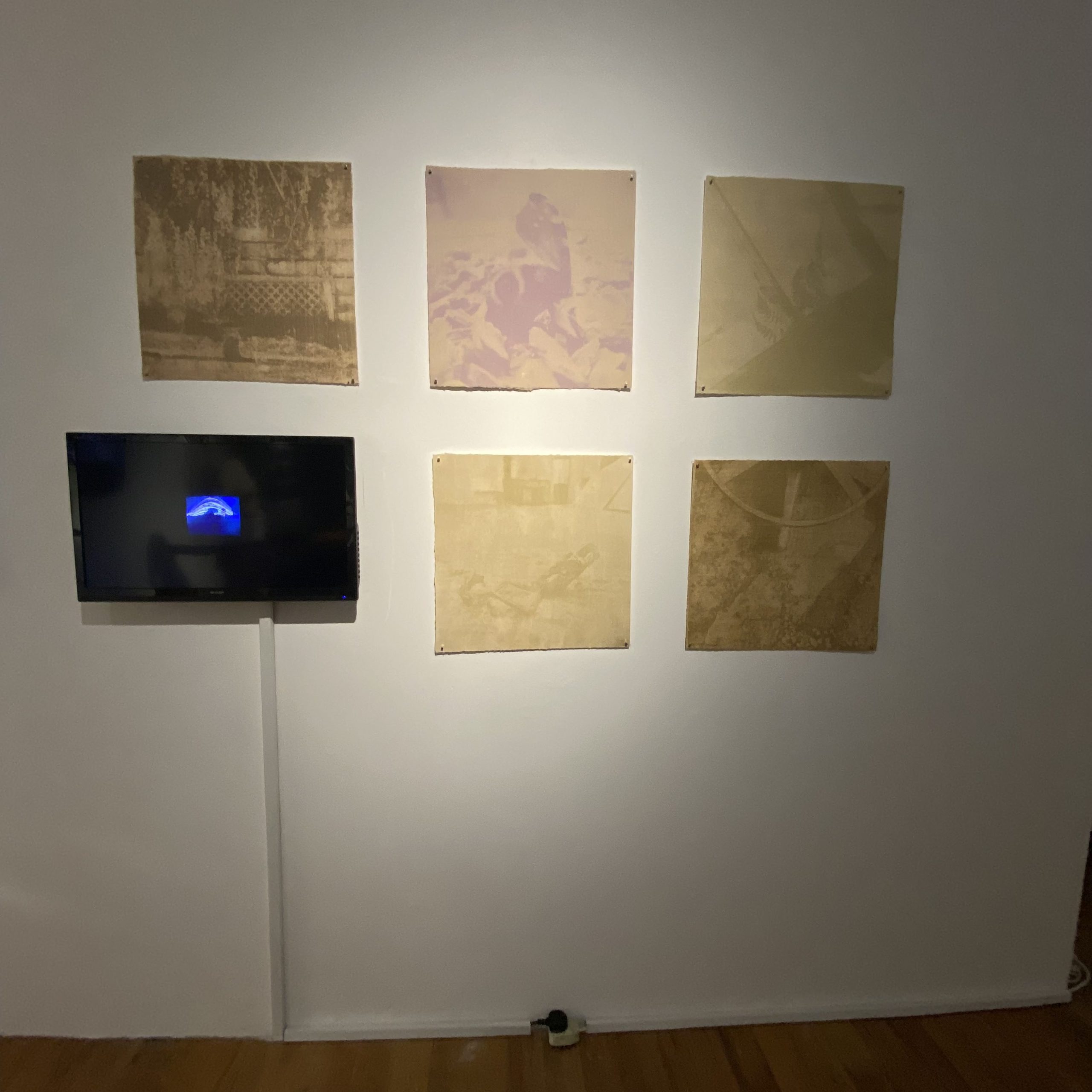
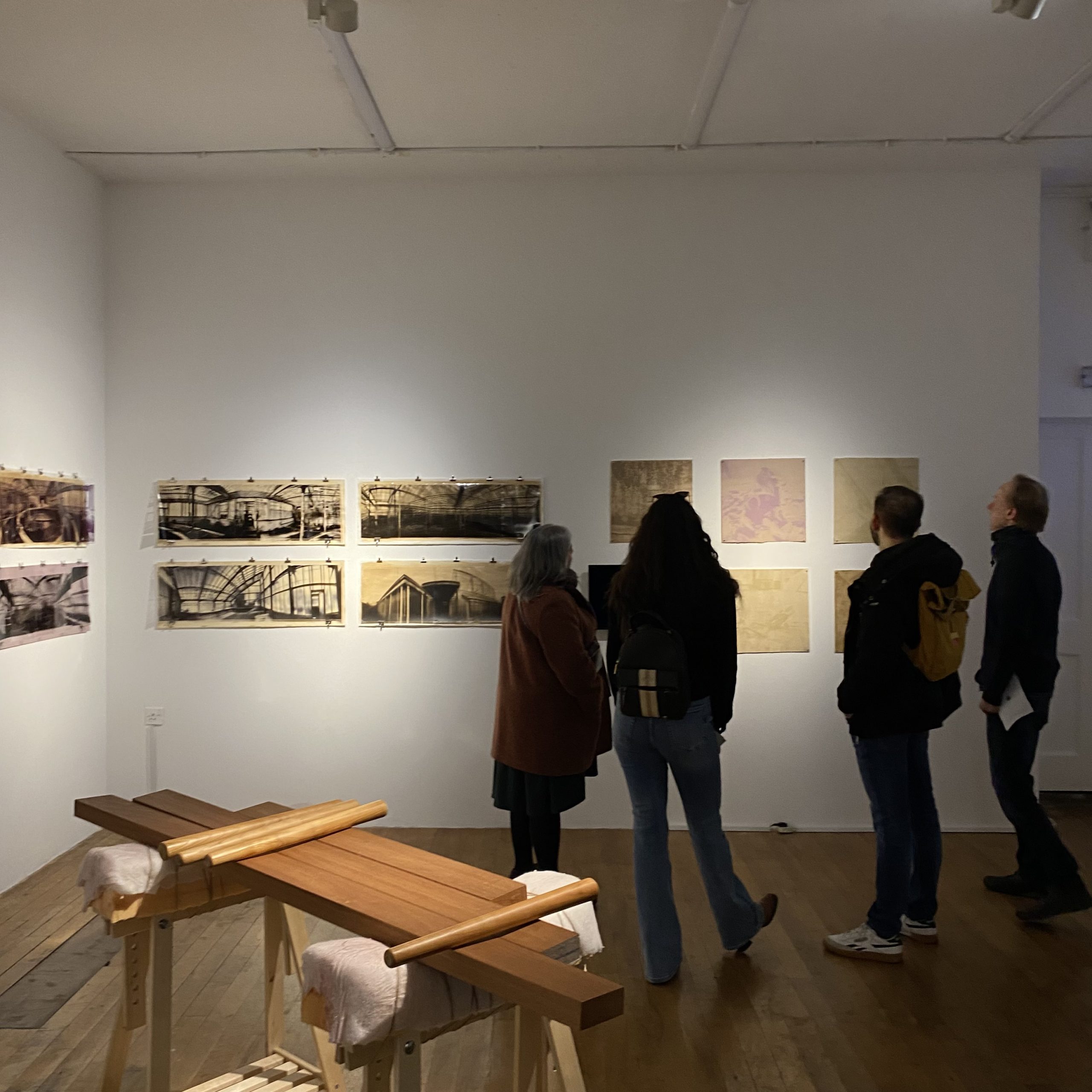
The anthotype panoramas of the glasshouse architecture provide a broad view of the anthropogenic and the organic ecosystem that has emerged within the glasshouses, where the architecture seems to dominate the current organic life. These anthotypes are intentionally exhibited with the positives and fixtures which were used for their exposure.

Anthotype emulsion by its nature is unstable and will fade with light exposure. The viewer is invited to lift the positive to view the image underneath. As the positive is lifted by the viewer the anthotype starts the process of fading, and as it is replaced, will start to expose again. The anthotypes, like the ecologies they depict, exist in a constant state of uncertainty, of formation and eradication, shaped by human influence.

The anthotype inhabitant portraits focus on some of the 100+ species now residing in these houses. These more-than-human inhabitants are plant, animal, bird, insect, fungi and even microbial representing a full spectrum of life with the houses. Inverse to the human centric world in which we exist, these prints aim to acknowledge each inhabitants intrinsic importance and centre them within this narrative. Each image captures both the inhabitant and the human-made structure in which they exist.

The titles of these portraits invite reflection on naming systems, drawing from Linnaean binomial nomenclature, common names across various languages and Indigenous terms many predating the colonial project. The titles speak to the complexities and legacies of naming and the lasting implications of such systems.

The pinhole camera images explore the passage of time through extended exposures ranging from four to six months. Using cameras made from recycled drinks cans— consumed by staff at the Botanic Gardens—the photographs capture the slow, deliberate unfolding of time in a specific place. 

Light enters the tiny pinhole of the camera and imprints an image on light-sensitive paper, which is then scanned digitally, avoiding traditional photographic chemicals, in favor of reusing materials. The scanning process floods the undeveloped paper with light, causing the image to be destroyed, thus reflecting the transience and impermanence central to the work. After scanning these images only exist in the fragile digital realm. This method highlights the interconnections between time, materials, and the environment, offering a visual meditation on time’s fleeting nature.

As the pinhole exposure is so slow, nothing that moves fast, such as humans, animals, birds etc., are recorded in the images. Depending on the direction of the camera, in some of the images there are arc’s of white or pink light in the sky. These are the tracks of the sun across the sky. Each line is a day. If there is a gap in the arc then there was no sun that day. The more tracks or gaps, the longer the pinhole camera has been exposing.

Some images have condensation marks or water which has dripped through the camera, reflecting particular environmental conditions. A number of pinhole camera’s were installed at the start of the project in 2023 with the intention that they will remain until construction starts, documenting the house environment over the entire period of the artists engagement with this particular ecology.

en_USEnglish