anthotype
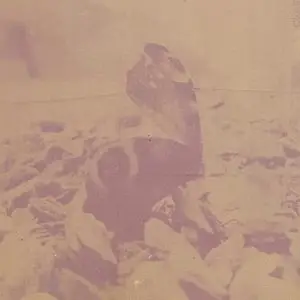
An anthotype is a type of photographic print made using plant pigments. A light sensitive emulsion is made by hand which is then painted on paper. A negative – or in this case a positive – is placed on top of the coated paper and exposed in sunlight.
The emulsion is made by extracting the pigment from fresh plant material combined with alcohol. Either a mortar and pestle or a hand blender can be used to do this, straining the resulting mixture through a mesh or some old tights.
The alcohol helps to draw out the pigment, but hand sanitiser, water or oil can used used as well.
Anthotypes are essentially contact prints. Either a positive (the opposite of a negative) or flattened objects like pressed leaves or flowers are placed directly on top of the dried coated paper with a sheet of glass or perspex on top.
The anthotype needs full spectrum light to expose and depending on the plants responsiveness it can take anything from one day to several months to expose.
As the emulsion is not light stable, it can fade easily. The theory is that is will take as long to fade as it did to expose.
pinhole photography
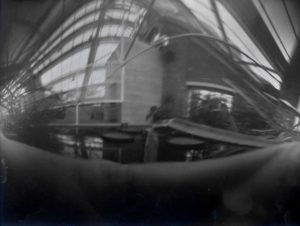
Pinhole photographs can be made using homemade cameras, using anything from drinks cans to match boxes to professionally designed pinhole cameras that you can buy commercially.
Reused drinks cans are easily accessible and easy to work with. Essentially a tiny pinhole is made in the side of the can, with the edges sanded to give a clean edge to the tiny opening. A lens cap is made with tape, photographic darkroom paper placed inside the can and sealed to make it light proof.
When the tape over the pinhole is lifted light enters the tiny pinhole and imprints an image on the light-sensitive photographic paper. The length of the exposure can be anything from 10 seconds to 20 minutes depending on light conditions. The resulting photograph can be developed traditionally or can be developed using plant based developers.
One of the benefits of a pinhole camera is that you can make long exposure images very easily as there is no shutter on the camera to control. A long exposure can be anything from a day to several years. However because the paper is exposed to so much light the photograph would be completely over exposed if it were to be developed traditionally but it can be captured by scanning on a flatbed scanner in the dark. The process floods the undeveloped paper with white light and if scanned a few times or even accidentially exposed to light it will be destroyed. All of my long exposure images can only be viewed as digital scans.
cyanotype
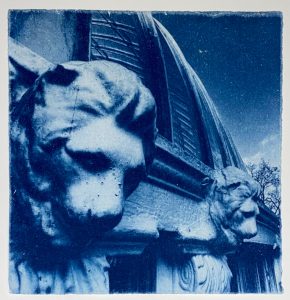
Cyanotypes have a distinct blue colour and are made in a similar way to anthotypes, but use iron salts mixed with distilled water as an emulsion.
The paper is coated with the emulsion and exposed in a similar method to anthotypes. Cyanotypes specifically need uv light to expose so they can be made in direct sunlight or with the use of a uv light. Once exposed they are rinsed in water to develop the image.
Cyanotypes can also be toned afterwards using a variety of materials such as coffee, tea, red wine as well as plant materials.
 English